

Registered Nurse | Healthcare Experience Since 2009
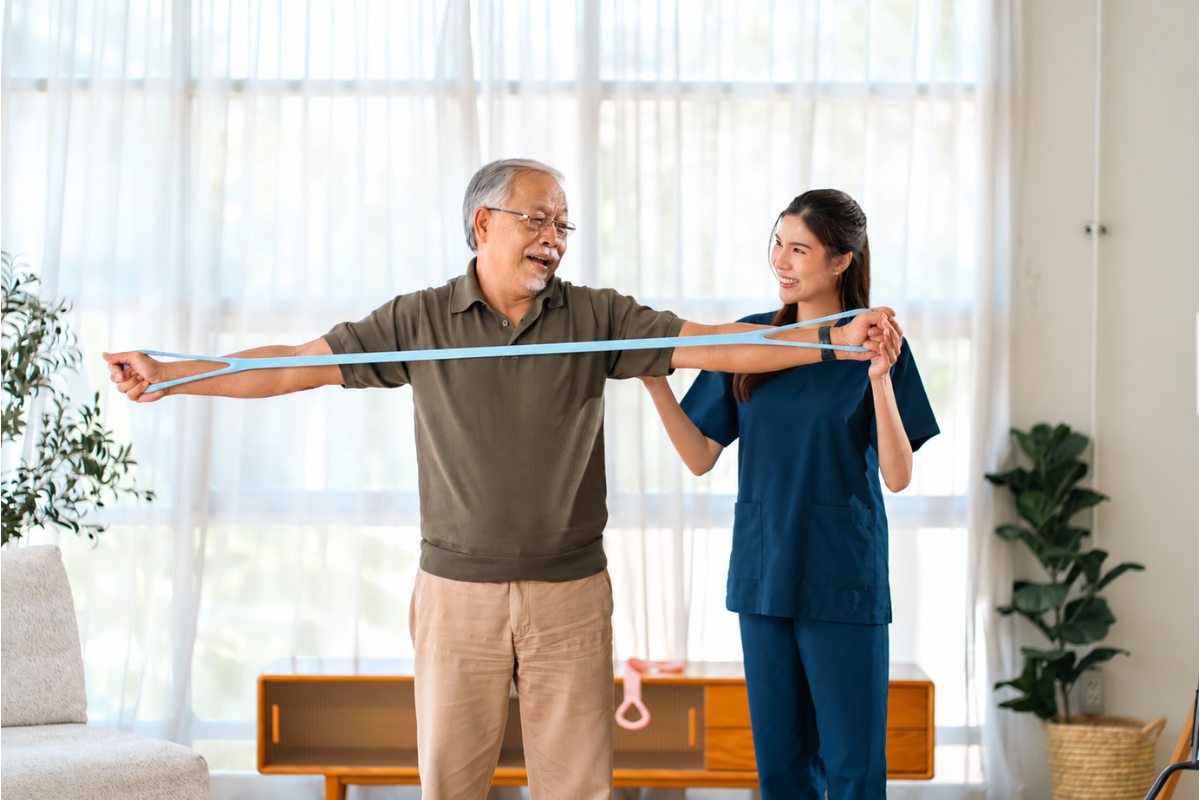
It’s important not to push your family members or your clients to do workouts that are beyond them. Instead, you should look to find acceptable and achievable ways to keep them active. Most caregivers are able to incorporate physical activities into their daily routine, and activities should be integrated into care practices such that caregivers and the older adults become used to doing them together.
Table of Contents
Start With the Person, Not the Exercise
When choosing activities for an older adult, factors such as mobility, energy, and health status, as well as other considerations such as their balance, should be taken into account. A person without any health issues may be able to participate in activities that involve long steps, whereas a person who has issues with standing and balance may not be able to engage in activities of that nature.
Ask simple questions:
- What kinds of activities do their interests and abilities allow?
- Are there activities they cannot do due to a lack of mobility?
- Does it cause symptoms of fatigue, pain, or dizziness?
- Has there been an event such as surgery or prolonged periods of inactivity?
- For activities of daily living, what kinds of movements do they have difficulties with?
When developing a program for an individual, keeping in mind their limitations due to a chronic condition, it would be prudent to consult a physical therapist or other healthcare practitioner. The CDC advises individuals with chronic health conditions to consult their healthcare practitioner about the type and amount of activity they should engage in. Our objective is to create a program that is sufficiently simple and engaging for an individual to adhere to.
Begin Slowly and Build Confidence
We should gradually increase the intensity and duration of physical activity. Start with a brief activity:
- Take a five-minute walk around your house
- Do five sit-to-stands from a chair
- Do arm and leg movements while sitting
- Do a balance activity while holding on to a counter
Work up to doing more activities or increasing the length of activities. The National Institute on Aging says that activities should be increased slowly over weeks or months. It is important to recognize and enjoy small achievements — this helps to build confidence and gives the individual the desire to continue the exercises.
Include Different Types of Movement
Older adults can benefit from aerobic activities, muscle-strengthening activities, and balance activities. The CDC says that adults 65 and older should do a variety of these activities each week.
Gentle Walking
Walk at an even pace and ask your partner to walk on an unobstructed surface. Choose a path that has rest stops or seating if your partner needs a break. Breaking up your activity into shorter periods is acceptable, and your activity need not exceed 10 minutes at a time.
Chair-Based Strength Exercises
It is important for older adults to engage in strength exercises in order to retain the ability to perform activities of daily living, such as shopping and preparing meals. You may also consider chair yoga as a gentle complement to these strength movements. Suggested strength exercises include:
- Squats: Rise from a seated position and repeat
- Calf Raises: Rise to your toes and repeat
- Tricep Dips: Bend your elbows and lower your body toward the chair and repeat
- Push-ups: Assume a plank position and lower your body toward the ground and repeat
Each exercise should be repeated 10–15 times. Move at your own pace and rest as needed.
Mobility Exercises
Simple, gradual movements can help older people feel less stiff and more at ease when carrying out their everyday activities. Examples include:
- Turning the head slowly from one side to the other
- Moving the shoulders in gentle circles
- Straightening and bending the knees while seated
- Moving the ankles up and down
- Reaching the arms forward and overhead within a comfortable range
You should never force these movements. The caregiver should encourage slow breathing and smooth movements, not aggressive stretching.
Simple Balance Practice
Balance practice helps to build trust with the environment and should always be done with support right beside the person. A few balance practice movements are:
- Standing with both feet together and holding onto a counter
- Slow movement of body weight from one leg to the other
- Heel-to-toe movement with a wall in front of them
Do not blindly increase the difficulty of an exercise without considering the consequences. It is not good form to have someone with poor balance stand without support simply because you think it makes the exercise more challenging.
Make the Routine Fit the Day
Using a schedule that an older adult already follows helps with adherence to a new routine. For example:
- Morning: A brief walk and a few mobility movements
- Midday: A set of sit-to-stands and wall push-ups
- Afternoon: A short walk with balance practice
- Evening: Some relaxing stretching
This does not mean an older adult is required to move several times a day. Physical activity occurs throughout the day — caregivers should also count housework and standing activities as forms of movement that help break up long periods of sedentary behavior.
Supervising Older Adults Engaged in Physical Activity
Supervision helps caregivers ensure the physical safety of older adults engaged in physical activity. However, supervision that takes away older adults’ independence does more harm than good.
When outdoors, review the NIA’s safety tips for exercising outdoors to choose a safe route free of obstacles. Avoid loose rugs indoors and slippery surfaces. Ensure the older adult wears appropriate footwear to help prevent injury.
Rather than forcing older adults to engage in physical activity, offer positive encouragement. Little changes can help older adults see exercise as something they are voluntarily doing to improve their health.
Know When to Stop
Exercise can always be stopped if the older adult is experiencing any discomfort, chest pain, or shortness of breath. Call for medical help if the older adult is experiencing discomfort and pain that is new, different, or lasts a long time.
Balance can also worsen suddenly. Contact a healthcare professional if balance gets worse suddenly or if the person feels unwell during exercise and movement becomes more difficult. Rest is part of the safe exercise routine and can be taken as needed — if the person is less energetic, the exercise routine can be shortened or an alternative, less demanding activity can be substituted.
Consistency Matters More Than Perfection
It’s better to do simple exercises safely and regularly than to do very complex exercises irregularly. The CDC recommends that everyone, including older adults, engage in some physical activity rather than no physical activity at all.
The best strategy for a caregiver is to exercise the older adult at home and to begin with very short exercises. The caregiver should always be nearby and provide physical support if needed.
Thank you Bob Bies for contributing this article.